

By Amy Dunbavin
Sustainability is finally being brought to the forefront of conversation across myriad areas of thought. Be it sustainable technology or sustainable economic development, we are now realising that our natural resources are in fact finite and a global change must be made in our consumption of these resources. It is indisputable that talks on sustainability are imperative to limiting the catastrophic effect of climate change and that individuals, alongside governments and large businesses, should be prioritising sustainability in every area of decision-making. However, I believe we should question what is meant by the western understanding of sustainable living and devise the term a more holistic interpretation, based upon the philosophies of some indigenous communities. To do this, let’s explore what is meant by the terms of deep and shallow ecology and look at how these concepts manifest themselves in the behaviours of some communities, shaping a sharp contrast to the behaviour of powerful governments and companies.
It is easy to regard sustainable living in all its forms as a relatively new phenomenon – a modern trend proposing a solution to the devastating effect of climate change and mass over-consumption. Yet this would be to completely overlook the fact that sustainability is a philosophy which has been held by humans since our very origin. At itss core, sustainability is a kind of minimalism. It proposes that humanity and other species take only what they truly need to survive and leave the rest for the wider ecosystem. Sustainability is a philosophy that often comes hand in hand with community, with the sharing of resources, labour and knowledge.
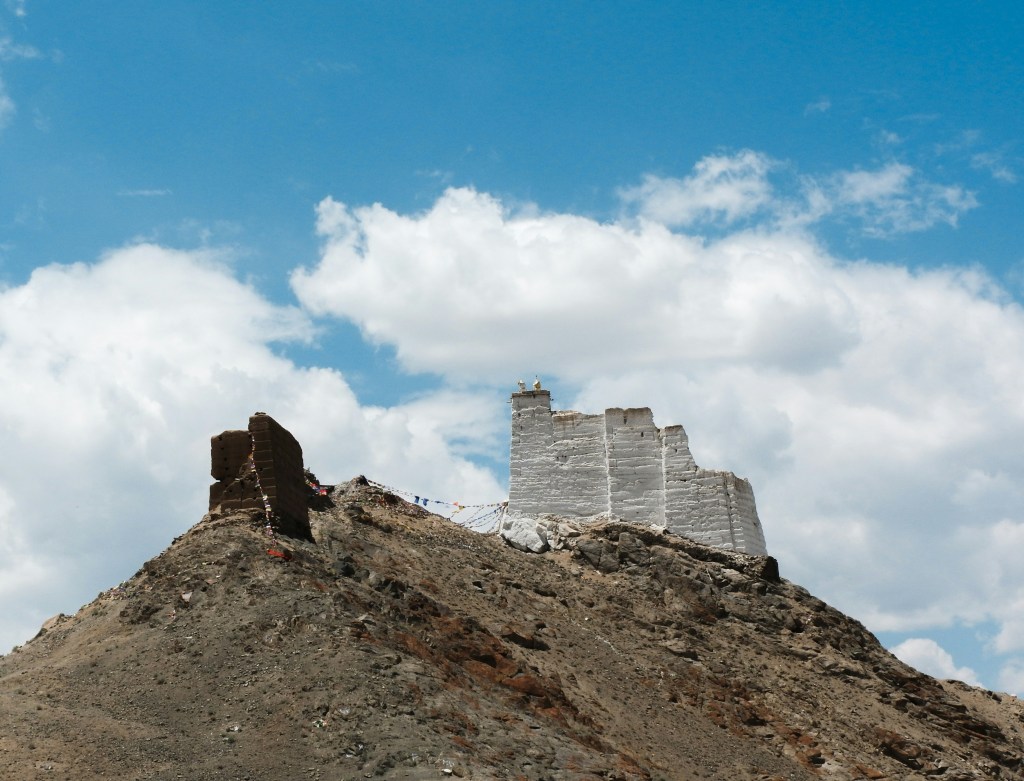
The Ladakhi people of India, are one of the indigenous communities worldwide which exemplify principles of sustainable living . In Ladakhi communities, the needs of the group as a whole are prioritised over the needs of the individual, with this principle being passed on between generations. There is a general awareness that it is the responsibility of every Ladakhi individual to be aware of the surrounding ecosystem and to partake in elements of food production such as crop management, planting rotations and the movement of livestock between regions. The younger generation of Ladkahis are taught these methods alongside the philosophy that humans are not at the centre of livelihood, they are rather just actors co-operating with the greater ecosystem. The sustainable philosophy of Ladakh is therefore hinged upon the concept of balance, between what is taken and what is given. It also ensures Ladakhi individuals are truly connected to what it is that they use and consume, a phenomenon which seems so distant from our current culture of mass availability and consumption of products whose origins are often entirely unknown to us consumers.
There is so much to be learnt from some indigenous communities like Ladakh, with a wealth of complex ecological and cultural knowledge being held by community members, knowledge which could be integral to informing goals which are truly compatible with a sustainable future. For example, the use of solar energy across Ladakh, using simple but effective systems to harness one of the most abundant energy sources and making it accessible to the entire community. This directly contrasts the pattern of adopting sustainable solutions in the west, where it seems that renewable energy systems are only available to those who can afford to invest in them and are a long way from being used within an entire community. Sustainability is at the heart of Ladakh culture in this way, through the preservation of the natural landscape, the conservation of natural wildlife or the protection of local indigenous knowledge. In this way, human life is integrated into the life of the surrounding environment, fulfilling the idea of deep ecology.
Subscribe to read more brilliant opinion pieces like this, straight to your inbox.
Deep ecology is an idea first coined by Naess in 1972. It proposes a way of living that shifts away from anthropocentrism, encouraging us to look towards nature and to value species in our ecosystems for their ability to live and survive, not just for their utility to humankind. Deep ecology is perpetuated by many communities, but still appears as a radical philosophy to many Westerners. This is because in order for deep ecology to be achieved, the behaviour of modern society will have to be considerably altered. We would need to move entirely away from our patterns of overproduction and overconsumption of goods across the board, from food to technology and energy. In this way, it seems an almost dystopian idea, the concept of living a life not driven by want and desire of material goods.
The alternative philosophy held in regards to sustainability is shallow ecology. This is a concept whereby humans will only adopt practices to protect and conserve other species if it is beneficial to them in some way. Shallow ecology is perhaps a more pragmatic form of ecologism than deep ecology as it acknowledges the fact that government leaders and big business owners are most likely to pursue targets for sustainability if they serve the interest of their population and/or consumers. This can be seen in some governments introducing measures to incentivise renewable energy production. It can be seen recently in the UK government’s £22bn spending on carbon capturing technologies in the Northwest of England, aiming to separate the carbon dioxide emissions from steelwork, ceramic or glass factories and to store the carbon dioxide under the North Sea (Willan, 2024). Though this would minimise carbon emissions from such factories in the short-term, NGOs such as Greenpeace have rightly warned that carbon storage will feed into a prolonged habit of using fossil fuels to fuel the nation in the future. It is clear that these kinds of decisions are always made with the economic ramifications considered, with fossil fuel consumption often justified by its affordability to consumers and to the investing governments. However, if a deep ecological perspective were taken, it could be seen that the health of the earth and the ecosystems inside it is a far greater concern than the economic situation of the world. After all, we are all poor on a dead planet.
There are therefore two approaches which can be taken when looking at how to approach sustainability in the future. On the one hand, policy-makers can look to disregard the economic element of energy production and fuel consumption, looking at making changes to immediately limit any further damage to the environment. On the other hand, they could continue to balance on their current tightrope of creating a manageable amount of change to build a more sustainable future, whilst continuing to rely in part on fossil fuels, a much slower process which still allows less developed countries to modernise at a lower cost. Sustainability and the achievement of it is therefore reliant on the attitudes of those in decision-making positions and whether they describe humanity as of central importance, or as simply another actor within the greater ecosystem. It is my firm belief that without adopting a deep ecological perspective within decision-making on climate change, change will be both too slow and ineffectual. We must therefore push to look at adopting sustainability as a way of life at every level, from individuals to governments, taking inspiration from the many communities worldwide who already do so.
Change The Narrative.
We need to listen to indigenous voices and make them heard! Indigenous languages and pedagogy must be preserved for us to learn about their patterns of sustainability. It is too often seen that indigenous voices become drowned by larger forces of either local or national governments. There are many sites which highlight this but survival international –Home – Survival International, is a site which draws attention to indigenous communities who are at risk and gives you an opportunity to help.
Reflect on your own lifestyle and habits. Perhaps take a more sustainable approach. This may include evaluating before consuming, what kind of purpose will this item be serving? Is it going to last? How will I dispose of it when I no longer need it?
Consider your position in the wider environment and adopt a wider perspective, respecting the complexity of ecosystems beyond human life, within which we play only a small part.
Read The Stories, Change The Narrative.
Amy Dunbavin is a young environmentalist and writer for the New Climate Journal from the UK, currently travelling on a gap-year.
 New Climate Journal
Leave a comment